

Insuring your holiday home in France
-
Process
-
Tax/legal
-
France
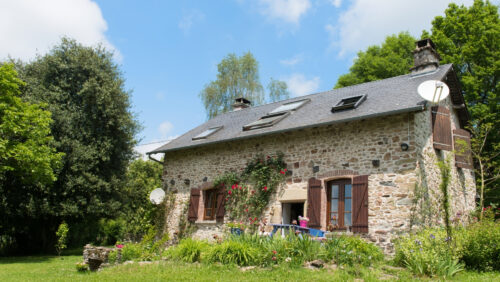
If you are going to buy a house in France, insurance comes into the picture fairly early in the buying process. Both the estate agent and the notary will soon shout ‘Attention, make sure you have insured the property before the transfer date’. So if you are going to buy a holiday home in France make sure you are well informed
Holiday home insurance: Property insurance
Property insurance and associated third-party insurance are compulsory in France and the notary will check whether a so-called Assurance Multirisque Habitation has been taken out. In most cases, the estate agent and/or notary will ask the buyer to provide an attestation (proof of insurance) at the time of signing the final deed of sale at the French notary. The attestation is issued by a French insurer of your choice and is a summary of the policy taken out beforehand.
In France, you can turn to numerous providers, even in a large village or small town you will find insurers on every street corner, similar to the pharmacies that are amply represented in every quartier. In addition, banks today offer almost as many different types of insurance as the classic companies such as AXA, Generali, Allianz, Groupama, etc.
Aggressive sales techniques
Banks can use quite aggressive sales techniques, especially if a loan has to be applied for as well. The banks will require the customer to take out home contents insurance and life insurance internally at the lending bank, otherwise no loan will be granted. In such a situation, many will be forced to take out everything from the bank. However, after a year, you can withdraw from this ‘blackmail’ and, under Loi Hamon, you may cancel your policies and take out a similar insurance policy elsewhere. Many insurers assist with the administrative challenge of cancelling the existing policies if you subsequently take out new contracts he them.
Illogical structure
In terms of content, French home contents/building insurance policies are perhaps a bit illogical by Dutch standards; for instance, the Dutch tend to take the value of the property as the basis for the contract and the insured value. In France, one counts the number of habitable rooms and the surface area of the outbuildings (think of the classic fermette with three large barns and a ruin next to them, always dreamed of so much space, so many stones that in the end you have no idea what to do with them; but you have to include them in the insurance, after all, the barns are your property and you are legally liable should a roof tile blow onto the neighbour’s car during a storm, to give just one example).
The addition of rooms and the rules around them can differ between insurers, so pay close attention when you ask for several quotes from different parties.
Consult with an insurance adviser
It is also important to discuss carefully with your insurance advisor which options you may want or need to include in your insurance. For example, think about solar panels, a sauna, a lawn mower, valuables such as art or the contents of the wine cellar…
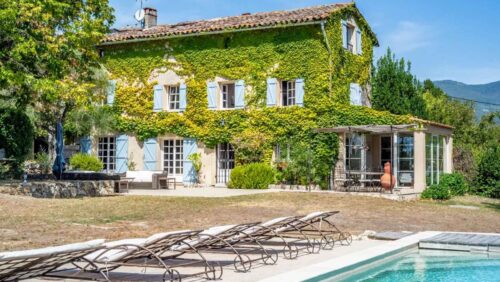
Finally, it is also important to consider your legal liabilities if, for example, you have a swimming pool or rent out your house or rooms as part of Gîtes/Chambres d’Hôtes Exploitation.
Thus, in conclusion, Assurances Habitation come in all shapes and sizes from a simple basic building insurance to a complete Multirisque.
A list of articles
-
Tax on your second home in France
-
France
-
Financial
-
-
Vacation home in France: what tax do I have to pay?
-
France
-
Financial
-
Process
-