


Buying a house on Bonaire? Your own piece of tropical Holland
-
General
-
Process
-
Bonaire
Our economy is doing well again and buying a vacation home as an investment is wildly popular. This is evident from the crowds at recent editions of the Second Home expo where large numbers of people orientate themselves for the purchase of a second home.
Anyone thinking of a vacation home as an investment cannot avoid also getting a good idea of its rentability. Popular vacation countries such as Spain, Portugal, Italy, Germany, Austria and the Netherlands are obvious destinations. When we think of the Netherlands as a destination for a vacation home, Bonaire does not immediately come to mind. Nevertheless, it is interesting to take a closer look at this island.
Buying a house on Bonaire: Authentic island and quality tourism
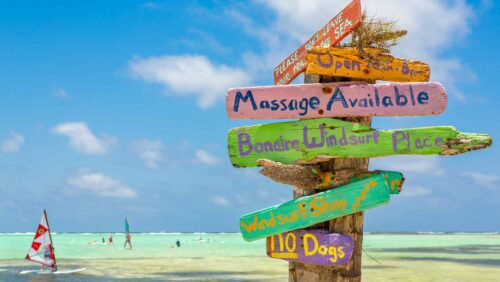
The island is listed worldwide as a top 3 diving and snorkeling destination, yet there is more to experience. Bonaire is also a mecca for wind and kite surfing enthusiasts, and a rapidly growing number of vacationers love coming to the island for its pleasant climate and laid-back lifestyle.
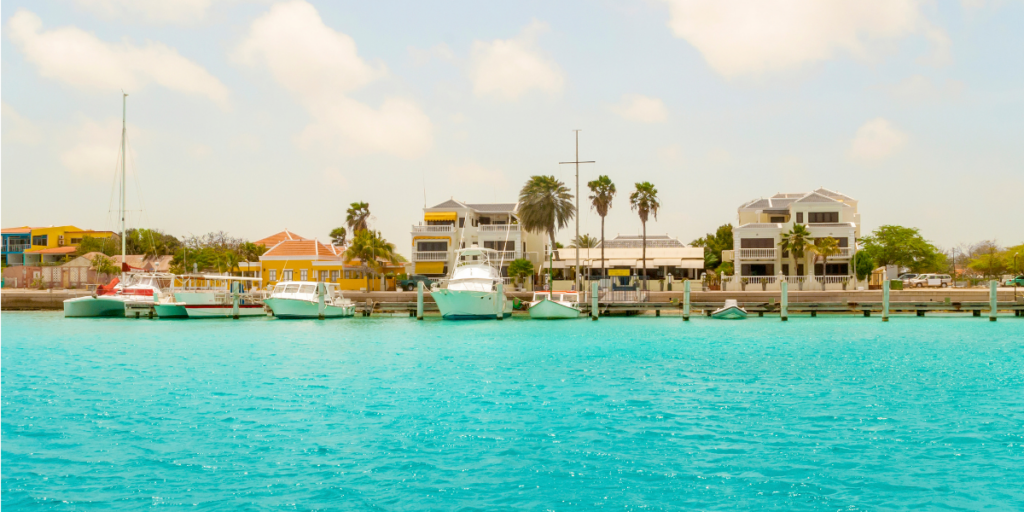
Although not inferior in size to Aruba and Curaçao, Bonaire is by far the least populated with 20,000 inhabitants. You won’t find mass tourism with hotel towers here, but small-scale resorts with hip beach clubs, excellent restaurants and luxury villas. All this surrounded by a rugged unspoiled coast with beautiful natural beaches and national parks.
Bonaire is also the most authentic of the Leeward ABC islands. From the moment you arrive on the island you feel the relaxed and casual Caribbean atmosphere. Living here is good and more and more people are finding their way to this paradise island for their second home.
Stable Dutch governance with an excellent level of amenities, sustainable growth of quality tourism and progressive economic policies.
Since the constitutional changes of the Netherlands Antilles in 2010, Bonaire, unlike Curaçao, Aruba and St. Maarten, has the status of a Dutch municipality. The population is represented by an island council, and the Dutch government (Rijksdienst Caribisch Nederland) is responsible for justice, education, public health and immigration in addition to the central authority.
Since Bonaire became part of the Netherlands, a new era has begun with many new opportunities and possibilities. These were laid down by the government in 2015 in a 10-year plan to 2025. Central goals include strong governance, a Dutch acceptable level of amenities and growth of the economy and tourism where sustainable use and conservation of nature are central.
To achieve these goals, tens of millions are invested annually in infrastructure (road network, sea and airport), facilities (hospital, schools, fire department), stimulation of the business and investment climate (no corporate tax and 5% dividend tax).
Favorable tax climate
Although Bonaire is part of the Netherlands, its tax laws differ significantly from Dutch regulations. For example, Bonaire has no sales tax (VAT) but a general spending tax (ABB) and rental income is exempt from this tax.
No income tax is levied on capital gains or rental income on Bonaire. Instead there is the vastgoedbelasting (property tax). This tax is not related to actual rental income but to the value of the vacation home (land and building).
The vastgoedbelasting amounts (including surcharges) to 0.805% of the value on January 1. There is a tax-free base of USD 70,000 (the currency on Bonaire is the U.S. dollar). This amount may therefore be deducted from the value to be taxed.
The Bonaire government encourages investments in new (recreational and other) real estate and an investment exemption applies. During the first 10 years, owners of a vacation home only pay property tax on the value of the land.
There is also a treaty to avoid double taxation. This means that if you use your savings from box 3 for a vacation home on Bonaire you will save capital gains tax on this money.
Bonaire, together with Aruba and Curacao, is geographically part of the Leeward Islands. These islands fall outside the hurricane zones and thus are not affected by hurricanes and tornadoes.
Source: Grandwindsockbonaire
A list of articles
-
The starting point to your dream home on Bonaire
-
Bonaire
-
General
-
Process
-
-
Buying a vacation home on Bonaire: some points of interest
-
Bonaire
-
General
-
Process
-